Can Umbilical Hernia Be Treated Without Surgery? {Complete 2026 Guide}
Quick Answer for Readers
Can umbilical hernia be treated without surgery? In adults, an umbilical hernia cannot heal, shrink, or cure itself without surgical intervention. While non-surgical options like watchful waiting, wearing an abdominal binder, and avoiding heavy strain can temporarily control symptoms, surgery remains the only medical treatment that permanently repairs the tear in the abdominal wall.
Introduction
Discovering a soft bulge or swelling near your belly button can be worrying. For many adults, the immediate question that comes to mind is: can umbilical hernia be treated without surgery? It is completely understandable why patients search for non-invasive remedies, natural treatments, exercises, or hernia belts. Surgery of any kind can sound intimidating, and finding a simple, non-surgical solution is always preferred if possible.
However, understanding the physical nature of a hernia is essential before deciding on a treatment path. An umbilical hernia is not a disease, an infection, or a swollen gland that can be dissolved with medication or home remedies. It is a physical, anatomical gap in the strong muscular wall of your abdomen. In this comprehensive guide, we will explore whether umbilical hernia treatment without surgery is viable, separate medical myths from clinical facts, review the risks of leaving a hernia untreated, and explain modern minimally invasive repair options.
What Is an Umbilical Hernia?
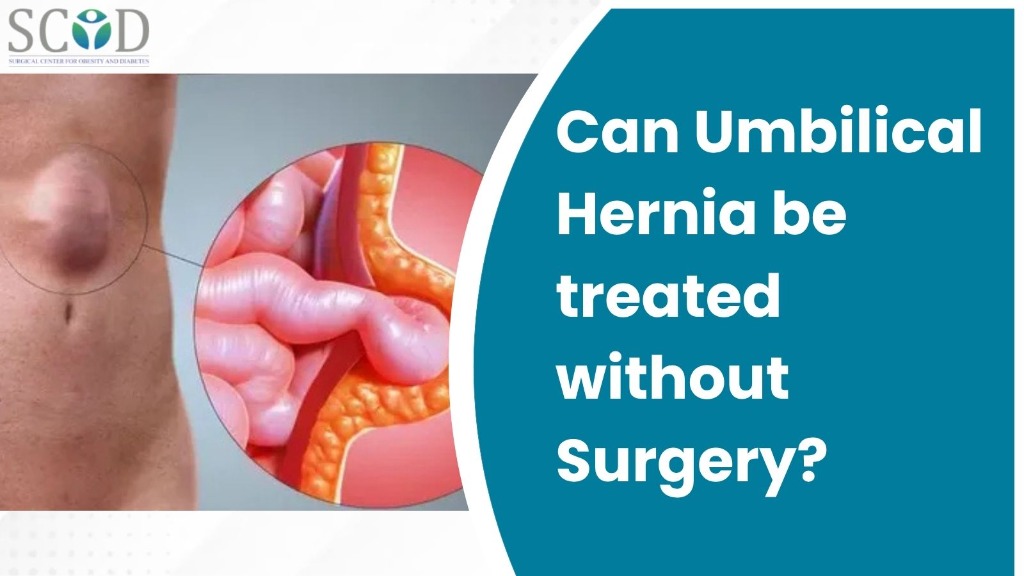
An umbilical hernia occurs when intra-abdominal tissue—such as fatty tissue or a segment of the intestine—pushes through a weak spot or gap in the abdominal muscles surrounding the navel (belly button).
During fetal development in the womb, the umbilical cord passes through a small opening in the baby's abdominal muscle wall. Normally, this opening seals tight shortly after birth. However, if the muscles fail to close completely, or if the abdominal wall weakens over time in adulthood, internal pressure can force abdominal tissue outward through this weak point.
In adults, umbilical hernias are frequently triggered or aggravated by factors that increase intra-abdominal pressure, including:
- Persistent chronic coughing or frequent sneezing
- Heavy lifting or intense physical strain
- Chronic constipation and straining during bowel movements
- Multiple pregnancies or carrying high abdominal weight (obesity)
- Previous abdominal surgeries or fluid accumulation in the abdomen (ascites)
Can Umbilical Hernia Be Treated Without Surgery? (Adults vs. Infants)
When asking can umbilical hernia be cured without surgery, it is crucial to make a clear medical distinction between infants and adults:
1. Umbilical Hernias in Infants & Children
In newborn infants and toddlers, umbilical hernias are very common. Because a child’s body is continuously growing and developing, the abdominal muscles naturally strengthen. In roughly 80% to 90% of children, an infant umbilical hernia will close spontaneously on its own by the age of 4 or 5 without any medical or surgical intervention.
2. Umbilical Hernias in Adults
In adults, the biological reality is very different. Once adult abdominal muscle fibers split or tear, they lack the capacity to spontaneously re-grow across the gap. Therefore, if you are wondering will umbilical hernia heal without surgery in adulthood, the clinical answer is no. An adult hernia defect will not shrink, fade, or seal itself shut. On the contrary, with ongoing physical activity, coughing, and aging, the defect almost always stays the same size or gradually enlarges over time.
Debunking Myths: Non-Surgical "Cures" & Home Remedies
There is a vast amount of misleading information online suggesting ways on how to fix an umbilical hernia without surgery. Let’s evaluate the most common non-surgical methods from a medical perspective:
Myth 1: Abdominal Binders, Trusses, and Hernia Belts
A hernia belt or truss applies external pressure against your belly button to push the bulging tissue back inside. While a binder may offer temporary symptomatic relief or support during light daily walking, it does not repair the hole in your fascia. As soon as you unbuckle the belt, the bulge returns. Furthermore, prolonged reliance on tight binders can cause skin irritation and weaken underlying core muscles.
Myth 2: Core Strengthening Exercises & Yoga
Many patients hope that doing planks, sit-ups, or targeted yoga poses will tighten their stomach muscles and seal the gap. Unfortunately, when an umbilical hole exists, contracting your abdominal muscles increases intra-abdominal pressure. High pressure forces more intestinal tissue outward through the defect, which can actually make the hernia larger and increase your discomfort.
Myth 3: Topical Ointments, Herbal Teas, and Medications
No pill, herbal supplement, massage technique, or topical oil can reconnect torn muscular tissue. Medicines can manage secondary symptoms like constipation or acid reflux, but they cannot fix an anatomical defect.
When Is Non-Surgical Management (Watchful Waiting) Appropriate?
Although an adult hernia cannot be cured without surgery, immediate surgery is not always required for every single patient. Under strict medical supervision, watchful waiting can be a safe initial strategy in specific scenarios:
- Small & Asymptomatic Hernias: If your hernia is very small, completely painless, easily reducible (pushes back in smoothly), and causes zero interference with daily life.
- High Surgical Risk Patients: Patients with severe underlying medical conditions (such as end-stage heart disease or advanced organ failure) where anesthesia carries higher risk than monitoring the hernia.
During watchful waiting, your doctor will advise you to adopt key lifestyle modifications:
- Maintain a healthy body weight to reduce constant pressure on the abdominal wall.
- Eat a high-fiber diet and drink plenty of water to prevent constipation and straining.
- Use proper body mechanics when lifting objects (bending at the knees, not straining the waist).
- Avoid smoking, as chronic smoker’s cough increases abdominal strain significantly.
Risks of Leaving an Umbilical Hernia Untreated
While waiting may seem convenient, ignoring a progressive bulge carries genuine health risks. Over time, abdominal pressure pushes organs into the gap, leading to serious surgical complications:
1. Incarceration
Incarceration occurs when a loop of intestine or abdominal fat gets firmly trapped inside the hernia sac and cannot be pushed back into the belly. This causes severe pain, swelling, and bowel obstruction.
2. Strangulation (Medical Emergency)
If an incarcerated hernia remains tightly squeezed, blood flow to the trapped tissue is cut off. Tissue strangulation can lead to tissue death (gangrene) within hours, requiring immediate emergency surgery.
Modern Solutions: Laparoscopic Hernia Repair
The good news is that hernia surgery today is vastly different from traditional open operations. With advancements in modern surgical technology, patients can achieve a complete cure with minimal discomfort and rapid recovery.
If you are looking for advanced treatment options, opting for Laparoscopic Hernia Surgery in Delhi allows you to undergo keyhole repair through 2 to 3 microscopic incisions. During laparoscopic repair, a miniature video camera (laparoscope) guides the surgeon as they gently push the bulging tissue back into place and reinforce the abdominal wall with a surgical-grade medical mesh.
Under the leadership of expert specialists like Dr. Arush Sabharwal at SCOD Clinic, patients experience minimal post-operative discomfort, near-invisible scarring, same-day or 24-hour discharge, and a quick return to normal daily routines.
Comparison Table: Non-Surgical Management vs. Laparoscopic Surgery
Here is a quick side-by-side comparison to help you understand your choices:
| Feature / Parameter | Non-Surgical Management (Binders / Watching) | Laparoscopic Hernia Surgery |
|---|---|---|
| Curative Ability | No (Does not repair defect) | Yes (Definitive permanent cure) |
| Symptom Control | Temporary compression only | Permanent relief |
| Risk of Complications | Persistent risk of trapped tissue | Prevents strangulation risk |
| Recovery Time | N/A (Ongoing management) | 3 to 7 days for light routine |
| Recurrence Rate | High (Bulge persists) | Extremely low (< 1-2% with mesh) |
Conclusion
To summarize, if you are asking is umbilical hernia curable without surgery, the medical consensus is clear: while temporary non-surgical strategies can help manage comfort in mild or high-risk cases, surgery remains the only definitive cure for adult umbilical hernias. Attempting to cure a hernia with home remedies, belts, or heavy exercises can often cause more harm than good.
If you or a loved one notice a belly button bulge, scheduling an evaluation with an experienced surgical team is the best step forward. At SCOD Clinic, Dr. Arush Sabharwal and our dedicated medical professionals specialize in state-of-the-art keyhole repairs. With advanced Laparoscopic Hernia Surgery in Delhi, you can enjoy a safe, hassle-free recovery and regain full peace of mind.
Frequently Asked Questions (FAQs)
1. Can umbilical hernia be treated without surgery?
In adults, an umbilical hernia cannot be cured without surgery because it is a structural tear in the abdominal wall. Non-surgical methods like watchful waiting, wearing an abdominal belt, or modifying activities can manage symptoms temporarily, but surgery is required for a permanent cure.
2. Can umbilical hernia be cured without surgery in adults?
No, an adult umbilical hernia is not curable without surgery. Unlike infants whose abdominal wall muscles may close naturally during growth, adult muscle gaps do not heal or close on their own. Surgical repair is needed to seal the gap and prevent complications.
3. Will umbilical hernia heal without surgery over time?
No, an adult umbilical hernia will not heal over time without surgery. Due to continuous abdominal pressure from daily activities like standing, lifting, and coughing, untreated adult hernias generally stay the same size or gradually enlarge.
4. How to fix an umbilical hernia without surgery temporarily?
To manage symptoms temporarily without surgery, doctors recommend watchful waiting for small, painless hernias. Wearing a supportive hernia binder can offer comfort during activity, though it does not fix the muscle hole. Avoiding heavy lifting and managing constipation also help minimize pressure.
5. Is umbilical hernia curable without surgery using targeted abdominal exercises?
No, exercises cannot cure an umbilical hernia. Intense core workouts like crunches or heavy lifting increase abdominal pressure, which can force tissue further through the defect and worsen the condition.
6. Can a hernia belt or truss push an umbilical hernia back permanently?
A hernia belt or truss holds the protruding tissue inside the abdomen while worn, but it does not heal the muscle wall. Once you remove the belt, the bulge reappears.
7. What happens if an umbilical hernia is left untreated for too long?
Leaving an umbilical hernia untreated increases the risk of severe complications, including bowel incarceration (trapped tissue) and strangulation (cutoff of blood supply), which is a critical medical emergency requiring immediate surgery.
8. When should you seek emergency medical attention for an umbilical hernia?
Seek immediate emergency medical care if the hernia bulge turns dark or discolored, causes intense unmanageable pain, cannot be pushed back in, or is accompanied by severe nausea, vomiting, fever, or inability to pass stool.